Your Coffee Habit Costs $1,500 a Year. It Doesn't Have To.
 Maryna Gray
• June 18, 2026 — last updated July 21, 2026
Maryna Gray
• June 18, 2026 — last updated July 21, 2026
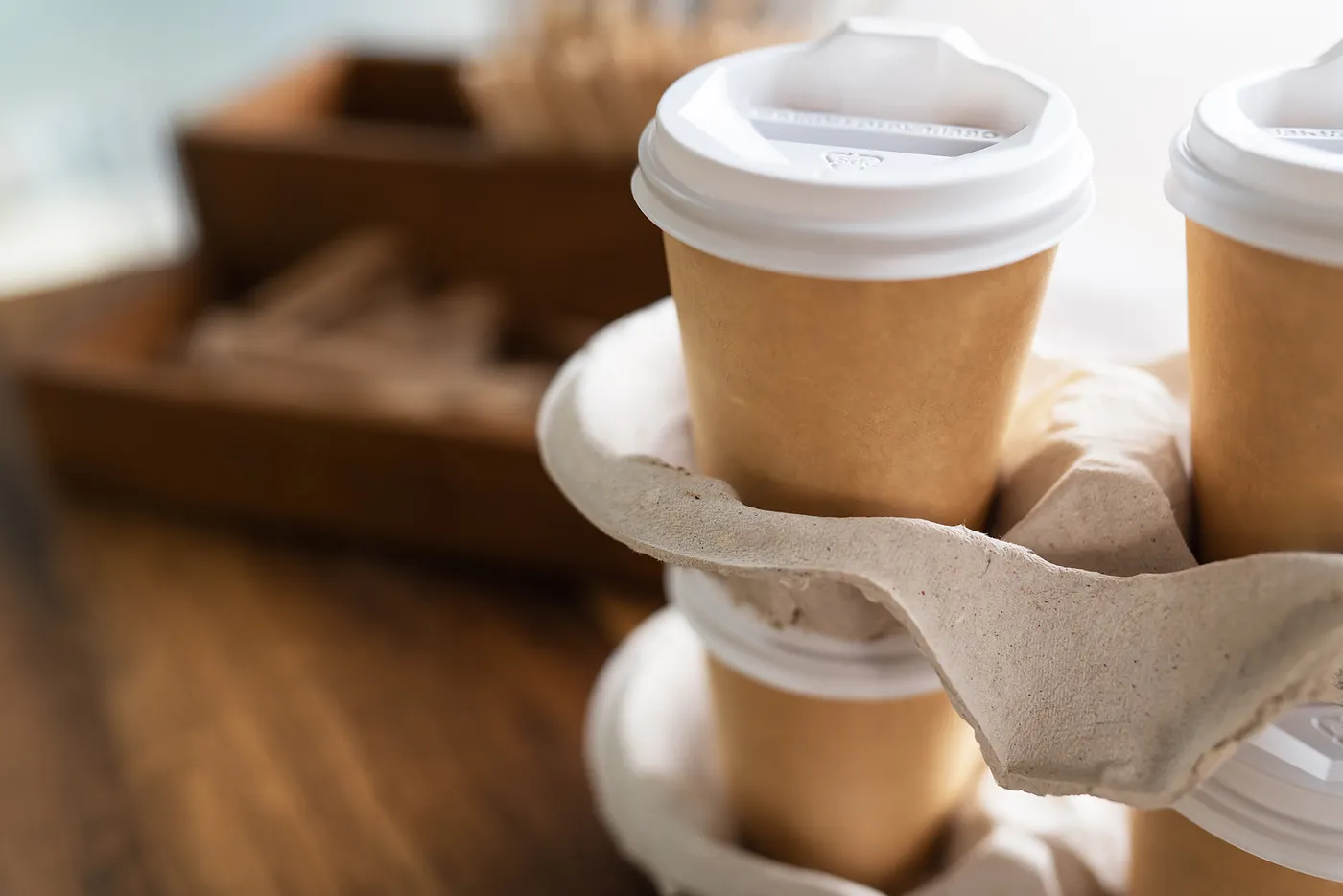
We've all done the math at some point. A latte every morning on the way to work, plus the afternoon top-up, plus the weekend specialty drink, and suddenly your coffee habit is showing up in your budget like a utility bill.
I want you to know where every dollar of that habit goes, and how to keep the morning you love (the warm mug, the smell of fresh grounds, the first sip) while spending a fraction of what you spend now. I've spent a decade cupping coffees from every continent that grows them, and I've watched this market from the buying side. Let me walk you through the numbers.
A frank framing first: 2024 through 2026 has been the most expensive coffee market in fifty years. The cafe lane got squeezed. The grocery shelf got squeezed harder. The one lane that held its shape, specialty bags from independent roasters, is the lane most home brewers haven't tried.
The short answer
We all want our morning cup, and we'd all like to keep the $1,500 a year we're handing to it. So here's the cost-per-cup math, lane by lane, and where the real savings live.
- A daily cafe drip habit runs roughly $1,300 a year. A daily latte habit runs $1,800–$2,200. Two cafe coffees a day pushes you toward $3,000.
- Brewing whole-bean specialty coffee at home lands at $0.60–$1.00 per cup, or $220–$365 a year for one cup a day. The savings are real, but only if the home cup tastes good enough that you actually stick with it.
- Coffee prices spiked in 2024–25 because of a dual squeeze: climate disruption in Brazil and Vietnam, plus tariff and freight inflation. Grocery beans jumped about 21% year over year in August 2025; cafe prices rose 4–5% YoY through 2026.
- Specialty direct-trade coffee has held its price shape better than the commodity-grocery lane, because direct relationships set prices through bilateral negotiation, not the C-market spot rate.
If you're skimming and want one number to remember: switching the daily cup from cafe to home is worth about $1,000 a year, and you can do it without sacrificing the cafe ritual on the weekend.
Why coffee got expensive (the dual squeeze)
The US retail price of ground coffee hit $9.61 per pound in March 2026, per the US Inflation Calculator's BLS-sourced coffee history. That's a fifty-year nominal high.
The grocery side took the biggest hit. Packaged whole bean and ground coffee jumped roughly 21% year over year in August 2025, per Daily Coffee News's coverage of the August 2025 CPI report. That's the fastest monthly jump in nearly three decades. Why so sharp? Big-brand grocery coffee buys on the C-market, the commodity coffee exchange, so a spike there prices through to the shelf almost directly. There's no buffer.
The cafe side rose less, but it rose. Toast's February 2026 menu price monitor, drawn from roughly 164,000 US restaurant locations, shows the national median hot drip at $3.65, up 4.3% YoY, and cold brew at $5.58, up 4.1% YoY. Cafes absorb some of the green-bean cost through labor, rent, milk, and cups. Green coffee is one input among many, so when the wholesale price jumps 60%, the cup price jumps 4%. It moves, but cushioned by everything around it.
The supply story under all of this: arabica futures peaked at $4.41 per pound in February 2025, more than double a year prior. Drought hit the 2024–25 Brazilian harvest. Vietnam's robusta crop took weather damage too. Brazil exports to the US plunged 46% in August 2025 after April 2025 tariff threats, and even though coffee was eventually exempted, the shock had already priced through, per Perfect Daily Grind's 2026 industry outlook.
The outlook is partial moderation, not reversion. Brazil 2026 arabica volumes are projected slightly higher; Vietnam is expecting 5–10% growth. But the C-market still trades well above the five-year average. Elevated prices are the baseline through 2026.
The five-lane cost-per-cup table
Here's how the math works. All prices are for an 8 oz cup, brewed at home or paid for at the counter. The cafe rows pull from Toast's median data; the pod and grocery rows divide retail prices by per-cup yield; the specialty home row assumes a typical specialty bag in the $15–$25 range yielding 20–24 cups at the SCA-standard 15g per 8oz cup at a 1:16 ratio.
| Lane | Cost per 8oz cup | Cost per year (1 cup/day) |
|---|---|---|
| Cafe latte or cold brew | $4.50–$6.00 | $1,640–$2,190 |
| Cafe drip coffee | $3.50–$4.00 | $1,280–$1,460 |
| Coffee pods (Nespresso, K-Cup) | $0.70–$1.10 | $255–$400 |
| Grocery-shelf ground coffee | $0.25–$0.40 | $90–$150 |
| Specialty whole bean (home) | $0.60–$1.00 | $220–$365 |
Grocery looks cheapest. Cafes look most expensive. The pod row is the one to look at twice. On the per-cup math, pods look fine. On the per-gram math (the way I'd actually evaluate them), they collapse. Per Regier Coffee Roasters' cost-per-gram breakdown, Nespresso runs the equivalent of $50–$80 per pound of coffee. K-Cups also run multiples above specialty whole bean. Specialty whole bean is $15–$25 per pound. Pods are the single most expensive way to drink coffee at home. They just charge you in $0.70 installments so you never see the total.

From our coffee sommelier
Maryna's weekly picks
“I taste thousands of coffees a year — I’ll only send you the few worth brewing.”
Something went wrong — please try again.
Free · Weekly · Unsubscribe anytime
The savings, concretely: switching from a daily $3.65 cafe drip to a daily $0.85 specialty home cup is $1,022 a year. Two cafe lattes per day at $5.20 each, replaced by two home cups at $0.85 each, saves $3,176 a year. Most people land somewhere between those two cases.
Here's the hedge. The math only works if your home cup tastes good enough that you actually drink it. If it tastes worse than the cafe, you'll keep buying the cafe drink too, and you spend on both lanes. The next sections explain what makes each lane the way it is, so you can choose with eyes open. The full home-vs-cafe taste piece walks through why the home cup so often loses, and the three or four moves that close the gap.
Cafe coffee: where the $4 cup comes from
The cafe price is mostly not the coffee. A small fraction of a $4 drip's cost is the green bean. The rest is labor, rent, equipment depreciation, milk, cups, the cleaning crew, the credit card processor, and the tax line. When cafe prices rose 4.3% YoY through 2026, what's going up is all of that, with green coffee adding a percent or two on top.
Why cafe coffee feels more painful even though the price moved less: the cafe is a habit, and habits compound. $3.65 twice a day, five days a week, is $1,898 a year. Add one $5.58 cold brew on the weekend and it's closer to $2,500. The cafe doesn't feel expensive until you total the year.
What the cafe buys you that home can't is reps. A barista brews the same recipe hundreds of times a day, dialing the grinder by taste. The cafe is also a place, not just a beverage. We don't pretend that's nothing.
Cafe coffee is a service, priced like one. The way to save isn't to switch all of it. It's to switch the daily lane to home and keep the weekend cafe ritual when it's worth it. You don't have to white-knuckle a $0.85 home cup every morning to come out ahead.
Grocery beans: the 21% spike no one warned you about
Grocery-shelf coffee was supposed to be the budget fallback. It was, for years. Then August 2025 happened, and US CPI showed packaged ground and whole-bean coffee at 21% more expensive year over year, the fastest monthly jump in nearly three decades.
The reason is C-market exposure. Most big-brand grocery coffee is sourced through the commodity coffee exchange. When the C-market doubled in 2024–25 because of the Brazil drought and the Vietnam shortfall, the grocery brands had no buffer. They buy spot, they pay spot, they price the bag at spot plus their margin. The line from the futures market to your shelf is short and direct.
Apply that 21% jump to the bags you actually buy and the picture sharpens. A grocery bag that was $12 a few years back is closer to $14.50 in 2026. A $14 bag is closer to $17. The price gap between the grocery shelf and a specialty bag has narrowed to about $5 per bag, while the quality gap has widened in the opposite direction. Grocery bags often sit on the shelf for months before you grab them. Specialty bags ship within days of roast.
The grocery shelf is the worst lane it's been in a decade. Cheaper than specialty per cup, yes. But the price-per-quality trade-off has shifted, and the math that made the grocery shelf the "smart" budget move five years ago doesn't work the same way now. If budget is the constraint and you want specialty quality, coffees under $20 on a curated catalog will land you in roughly the same per-cup zone as the inflated grocery bag, with fresher beans.
Specialty at home: why direct-trade buffered the storm
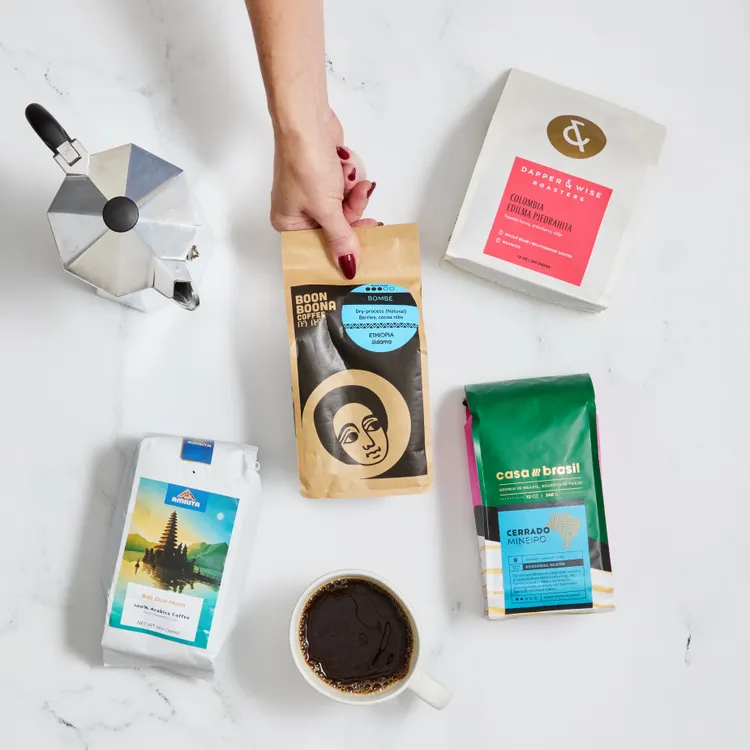
There's a fifth lane the spreadsheet leaves out. When you buy a specialty bag directly from an independent roaster, or through a curator like Bean Box, you're stepping out of the commodity exchange entirely. Specialty roasters buy through direct trade or relationship-based contracts, often with the same producers year after year.
Why that matters in 2026: those contracts are set bilaterally, with terms that hold across years. When the C-market spiked in 2025, direct-trade specialty pricing moved less sharply because the contracts were already in place. Coffee producer-buyer consultant Carly Green told Perfect Daily Grind's 2026 industry outlook: "higher prices sound like good news for producers, but with rising costs and constant volatility, planning ahead can be challenging." Direct-trade buyers help roasters and producers do that planning, which means more stable bag prices for you on the other end.
I've personally cupped through hundreds of bags from dozens of independent roasters across the US, and the bags I bought in 2024 and the bags I'm buying in 2026 are not separated by a 50% price jump. They've moved a little. They haven't moved like the grocery shelf. The fresh-roasted-coffee deep-dive is the companion piece on why the freshness gap matters more than the price gap.
Specialty bags typically fall in the $15–$25 range, and that range has held through the spike. A 12-oz specialty bag yields 20–24 cups at the SCA-standard 15g per 8oz cup at a 1:16 ratio. That math lands you at $0.60–$1.00 per cup at home, within striking distance of the grocery shelf's $0.25–$0.40, for fresh, single-origin, specialty-grade coffee that ships within days of roast. The premium over grocery beans is closer to $200 a year. The savings versus the cafe lane is closer to $1,000.
I should say it plainly. I'm Bean Box's curator, and the lane I'm telling you to look at is the lane I work in every day. The math holds even if you buy your specialty bags somewhere else, whether that's your local roastery, a competitor's subscription, or an independent roaster's website. The structural point about direct trade applies to any specialty roaster who actually does it. If you want to see what shipping fresh from a curated catalog looks like, subscribable specialty coffees is a good place to browse.
The honest reasons you might still pay more
Not every reader should switch all the way to home. There are real reasons to keep some of your cafe spend.
Convenience. You can't brew a flat white at home before a 7 a.m. meeting if you don't already own an espresso machine and the muscle memory. Sometimes the cafe is the right answer because your morning has fifteen minutes in it and the cafe has the workflow.
Social. You go to the cafe because someone is meeting you there, or because it's where you actually focus for an hour. That's not a coffee purchase. It's a place rental that comes with a drink.
Variety. A single specialty bag gives you one coffee for two to three weeks. The cafe gives you a flat white on Monday, a cortado on Tuesday, a cold brew on Friday. A coffee subscription with rotating roasts is the closest home solution, and that's the move that closes the variety gap without sending you back to the counter for everything.
Saving $1,000 a year doesn't require eliminating the cafe ritual. It requires moving the default, the cup you drink without thinking about it, from cafe to home.
Where you land usually depends on…
Where you land usually depends on how much you already cook at home versus how much you eat out. If you've already built the habit of grinding beans and brewing a Saturday pour-over, scaling that to weekday mornings is the cheap move. You've already done the hard part.
If the idea of choosing a bag every two weeks feels like a chore, and that's most people honestly, a curated subscription is the structural shortcut. You're outsourcing the bag-selection burden to a curator (in our case, me) and getting fresh coffee from independent roasters in the $0.60–$1.00 per-cup band, on a cadence that matches how often you brew.
Our coffee subscription configurator lets you set the roast level, the cadence, and the bag size that match your actual brewing habits. If you'd rather just see what we send beginners most often, our best-sellers is the start-here list.
Whichever lane you pick, the move that pays off in 2026 is moving the daily cup home. $1,000 a year is real money. The bag on your counter is the cheapest cafe replacement on the market.
Brew it. Trust me.
Tags: Beginner
We want to help you make better coffee at home. Our recommendations are our own, and never sponsored. If you see something you love and buy it through our links, we may receive an affiliate commission (thanks for that!).
From our coffee sommelier
Maryna's weekly picks
“I taste thousands of coffees a year — I’ll only send you the few worth brewing.”
Something went wrong — please try again.
Free · Weekly · Unsubscribe anytime