The Coffee Grind Size Cheat Sheet: One Reference for Every Brew Method You Own
 Maryna Gray
• July 14, 2026 — last updated July 21, 2026
Maryna Gray
• July 14, 2026 — last updated July 21, 2026
We've all stood at a coffee bar staring at a grinder dial that runs from 1 to 40, with no clear sense of which number our brew method actually wants. And we've all eyeballed our home grinder's setting, brewed a cup, and known something was off without knowing whether the answer was "finer" or "coarser" or "just throw it out and start over." Grind size is the single most-important variable in brewing. It's also the one most home setups get wrong, because the chart in every roaster bag's tasting notes assumes you know what their "medium" means versus your grinder's "medium." Spoiler: those numbers don't line up, and that's why your French press is silty and your pour-over is sour.
I want you to walk away with a one-page reference for every brew method you own. The kind of chart that tells you espresso wants table-salt fine, French press wants kosher-salt coarse, and AeroPress is forgiving enough to work across the whole range. Plus the dial-in-by-taste rule that overrides any number on the chart when your cup tastes wrong.
I drink my coffee mostly black, mostly pour-over, with a soft spot for a perfectly-frothed cappuccino, and I've dialed in more grinders than I can count. Here's the cheat sheet I actually use.
A quick orienting thought before the chart: this is a starting place, not a prescription. The real skill in grinding isn't memorizing micron numbers. It's reading what your cup is telling you and adjusting from there. The thesis underneath the chart is simple. Uniformity beats precision. A great grinder at "roughly medium" beats a bad grinder at "exactly 18 clicks." Numbers get you to the right neighborhood. Your tongue gets you to the right house.
The short answer
We all want one cheat sheet that handles every brew method without making us memorize 200 grinder models, and the honest version is shorter than the internet wants it to be. I'll give you the chart, then I'll tell you the rule that overrides it.
- Finer means slower water flow and more extraction. Coarser means faster water flow and less extraction. That single relationship runs the entire chart below.
- Espresso to French press is roughly 200 microns to 1,300 microns — that's the whole working range. Most home grinders cover it. Most beginner-grade ones cover it badly.
- Taste your cup before you chase a number. Sour means grind finer. Bitter means grind coarser. The rule that beats every chart.
What "grind size" actually means
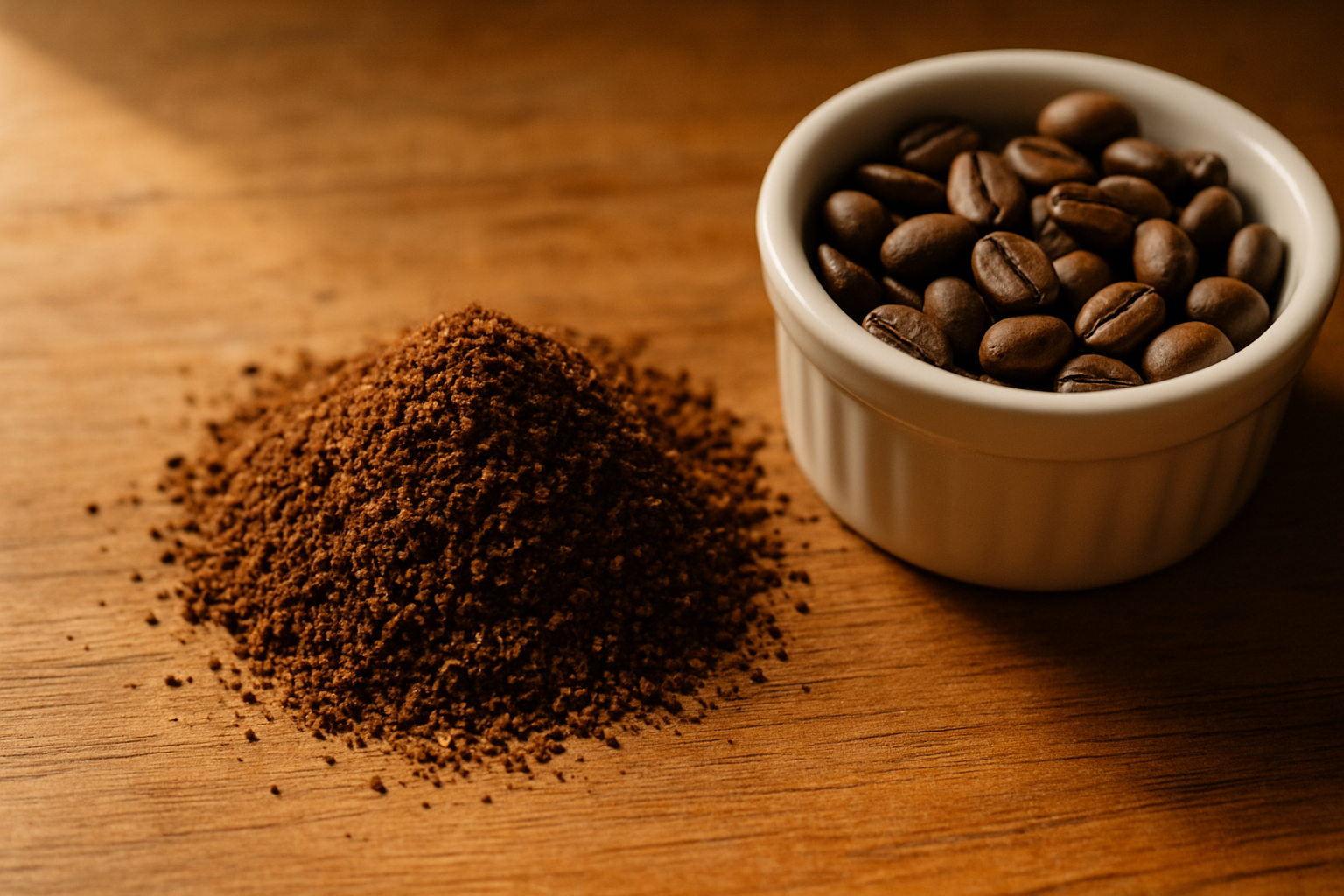
Grinding a whole bean from one solid mass into thousands of small particles does one thing: it exposes surface area. Water can only pull soluble compounds out of coffee where it's actually touching the coffee. More surface means faster, more extraction. Less surface means slower, less extraction. Your brew method tells you which extraction speed you want, and grind size is the lever that gets you there.
The specialty world has a target number for "right" extraction: roughly 18 to 22% of the coffee's soluble mass dissolved into the cup is the sweet spot for most styles, per Counter Culture Coffee on extraction basics. Below 18%, the cup tastes sour and thin. Over 22%, it tastes bitter and dry. Grind size is your lever for moving extraction up or down inside that band.
Brew time and grind size are inverse partners. Shorter brew time wants finer grind: espresso pulls in 25 to 30 seconds with a fine grind. Longer brew time wants coarser grind: French press steeps for 4 minutes at coarse, cold brew steeps for 12 to 24 hours at very coarse. Same target extraction yield, opposite ends of the chart.
If you want the data: espresso runs roughly 180 to 380 microns, French press 690 to 1,300, pour over 410 to 930, AeroPress works across roughly 320 to 960, per the Honest Coffee Guide's micron database. You don't have to memorize those numbers. They're here so you can spot when a brand's "medium" setting lands two ranges off from what your method actually wants.
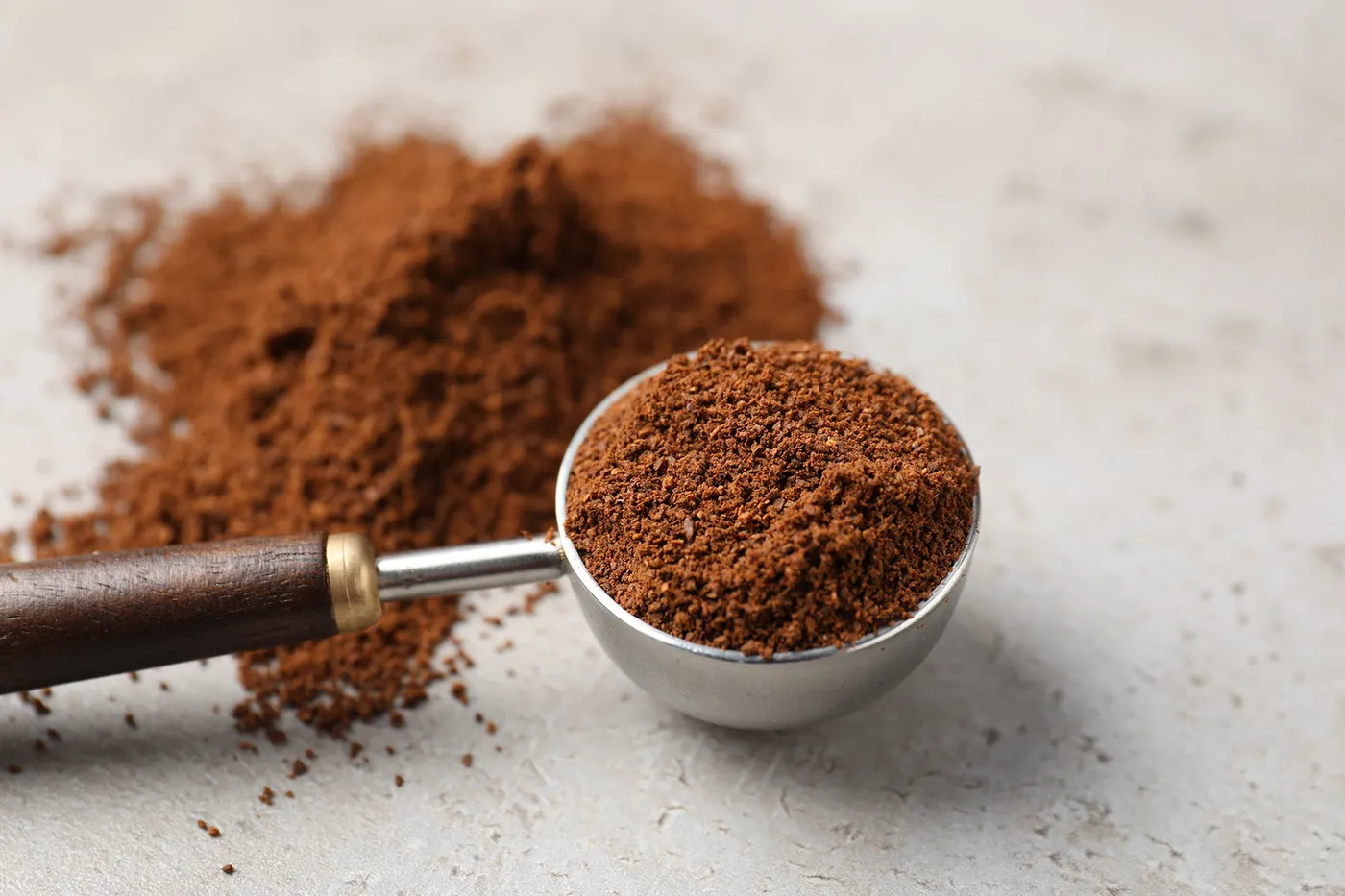
For everyday kitchen use, the texture analogy is easier to remember: kosher salt is French press, table salt is espresso, fine beach sand is pour over, regular beach sand is drip, powdered sugar is Turkish. Every row of the chart below uses both — microns for cross-referencing, texture for the kitchen call.
The cheat sheet — every brew method, dialed in
Espresso. Fine, roughly 180 to 380 microns — like table salt. Brews in 25 to 30 seconds under roughly 9 bars of pressure, per His Word Coffee on grind size by brew method. The most demanding grind on the chart. Half a number on a real espresso grinder changes whether the shot runs in 22 seconds (under-extracted and sour) or 35 seconds (over-extracted and bitter). Dozens of our current roasts are explicitly recommended for espresso — coffees for espresso is where they live in the catalog.

From our coffee sommelier
Maryna's weekly picks
“I taste thousands of coffees a year — I’ll only send you the few worth brewing.”
Something went wrong — please try again.
Free · Weekly · Unsubscribe anytime
Moka pot. Fine to medium-fine, coarser than espresso. Closer to table salt with a hint of grit. The moka pot is heat-driven pressure, not pump-driven, so the grind needs to be fine enough to create resistance but not so fine that the water can't push through at all. A grinder set one or two clicks coarser than its espresso setting is the right starting place. The chocolatey, syrupy moka cup you remember from a stovetop somewhere wants this exact zone.
AeroPress. Medium-fine to start. Finer than drip, coarser than espresso, per AeroPress's official grind guide. The most forgiving method on the chart — it works across roughly 320 to 960 microns thanks to the sealed-cylinder pressure assist. If your grinder is mediocre, AeroPress is the most forgiving brew method you own. The official guide also mentions a 2 to 3% pre-drip before you press, which is normal, not a leak you need to fix. I reach for the AeroPress when I'm traveling and the grinder situation is unknowable; the cup almost always lands somewhere drinkable.
Pour over (V60, Kalita, Chemex). Medium to medium-fine, roughly 410 to 930 microns. Like fine beach sand. Smaller single-serve V60s want it finer because the smaller coffee bed steeps faster, and finer grind slows the water back down. Larger Chemex batches want it coarser because the longer water-through-coffee path already gives you enough contact time. A 3 to 4 minute total brew at this grind size hits the extraction sweet spot for most pour-over recipes. The bloom smells like wet bread and cocoa when the grind is right.
Drip (auto-drip machine). Medium, like regular beach sand. The widest sweet spot of any method — most auto-drip machines are forgiving across roughly 300 to 900 microns because the contact time is moderate (4 to 6 minutes total). A medium pre-ground from your roaster will work fine here; this is the brew method most tolerant of imperfect grind setups.
French press. Coarse, roughly 690 to 1,300 microns — like kosher salt. Full-immersion brewing for 4 minutes, so the grind has to be coarse enough that the fines don't slip through the mesh filter and turn the cup into sludge. If your French press is silty at the bottom and the last sip is muddy, you're grinding too fine. Not because your grinder is broken, but because that's what bimodal blade-grinder dust does at any setting. We'll come back to that in a minute.
Cold brew. Very coarse. Coarser than French press, closer to chunky kosher salt with the larger crystals. Cold brew steeps for 12 to 24 hours, so a finer grind would over-extract and turn the cup bitter or astringent. The whole appeal of cold brew is the smooth, low-acid, almost-creamy extraction — wrong grind, and you'll wonder why everyone says cold brew is sweet. A coarse grind from a real burr grinder is the difference between the cold brew you actually want and a flat, harsh cup that wastes the time you spent waiting on it. If you don't own a grinder yet, we keep a curated shortlist of cold-brew-friendly coffees year-round at cold-brew coffees.
Turkish. Powdered sugar fine. Finer than espresso. The only method where the grounds stay in the cup, so the grind has to be fine enough to settle quickly and leave a clear column of liquid above. Most home grinders can't go this fine — Turkish-specific grinders exist for a reason. The texture is the whole experience: thick, almost a liquid pudding, with a foamy head and a sediment layer you don't drink. Cardamom optional.
A note for readers without a grinder yet: most of our partner roasters' current coffees will grind to your method on request, so you can start brewing without committing to a grinder purchase first. Freshly-ground coffees is where the pre-ground options live. The trade-off is freshness — ground coffee loses aromatic compounds faster than whole bean, so if you go pre-ground, brew it within two weeks of arrival.
Dial in by taste, not by number
Here's the rule that overrides every chart, every grinder spec sheet, and every micron measurement on the internet. Sour means grind finer. Bitter means grind coarser. Brew, sip, adjust, brew again. As Clive Coffee on dialing in espresso by taste puts it, your tongue is the only instrument that actually matters at the end of the recipe.
Sour means under-extracted. The water didn't have enough surface area or enough contact time to pull out the sweet, soluble compounds from the bean. The bright acids extract first; the sugars and caramels extract later. A sour cup is one that didn't get to "later." Grind finer to slow the water down, expose more surface, give the extraction more time to work through the bean. The cup will warm up on the second pass.
Bitter means over-extracted. The water pulled out everything pleasant — the sweet, the bright, the fruit — and then kept going and grabbed the harsh, woody compounds that extract last. A bitter cup is one that went too far. Grind coarser to speed water through the puck and stop the extraction sooner.
Adjust one variable at a time. If you change grind size AND brew ratio AND water temperature in the same pass, you can't tell which change fixed the cup, and you've learned nothing about your setup, per Witch Coffee on grind size troubleshooting. Quarter-to-half-number adjustments on your grinder dial. Taste. Then adjust again.
The trickiest case: a cup that tastes sour AND bitter at the same time. That's almost always your grinder, not your technique. A bimodal blade grinder is extracting some of the dust over-aggressively while under-extracting the chunks at the same time. One cup, two failures, simultaneously. The fix isn't more dialing in — it's a real burr grinder. The stopwatch-paced dial-in protocol is its own piece if you want the espresso version of this work.
Grind sizes on the chart are starting places. Your taste is the destination.
The grinder behind the chart
The chart only works if your grinder can follow it. The decision underneath everything in the cheat sheet is burr versus blade, and it's not close.
Burr grinders crush beans between two rotating burrs at a fixed gap, producing a roughly uniform particle distribution. Blade grinders chop randomly with a spinning blade, producing a chaotic mix of dust and chunks, per Fellow Products on burr vs blade grinders. Fellow's framing: "When all particles are the same size, they all extract at the same rate." That's the whole game.
Here's why this kills the chart. A blade grinder set to "medium" gives you dust AND chunks at the same time. The dust over-extracts. The chunks under-extract. Your cup is simultaneously bitter AND sour, no matter how many times you adjust. Uniformity beats absolute size — a great burr grinder at "roughly medium" beats a blade grinder at "exactly medium." This is the load-bearing fact under the whole reference. You can pick the right row on the chart, follow the texture cue exactly, and still get a bad cup if your grinder is producing two different grinds at once.
The expensive truth: a $40 blade grinder will never follow this chart. A $150 starter burr grinder will. A $400 burr grinder will be the last grinder you ever buy. The chart is a map; the grinder is the vehicle that gets you there. The burr-grinder-vs-blade guide walks through the budget side of this decision.
Quick honest disclosure: Bean Box doesn't sell grinders. We sell coffee, from dozens of independent roasters across the US. That's why this section can be blunt about blade grinders.
If you'd like a curated path through this
Grind size matters more than almost any other variable in the cup. Once your grinder can keep up with your brew method, though, the next variable that moves the cup the most is the coffee itself.
If you'd rather not spend the next year hunting for the right roaster for your French press versus your espresso versus your cold brew, our Coffee Plan does the curation for you. Three quick questions about your roast preference, how often you brew, and which method you favor, and fresh coffee arrives on a cadence that matches your kitchen. I'm the curator. The plan exists because hunting through dozens of roasters every two weeks for the right bag for the right method gets old fast.
The cheat sheet is one bookmark. Use it as the starting point. Then trust your tongue.
We want to help you make better coffee at home. Our recommendations are our own, and never sponsored. If you see something you love and buy it through our links, we may receive an affiliate commission (thanks for that!).
From our coffee sommelier
Maryna's weekly picks
“I taste thousands of coffees a year — I’ll only send you the few worth brewing.”
Something went wrong — please try again.
Free · Weekly · Unsubscribe anytime