Washed, natural, honey: how coffee processing changes what's in your cup (and what to buy next)
 Maryna Gray
• June 23, 2026 — last updated July 21, 2026
Maryna Gray
• June 23, 2026 — last updated July 21, 2026
Most of us have stood in a coffee aisle holding two bags from the same country. Same roaster, same roast level, same altitude. The only difference on the label is one word. Washed on one bag. Natural on the other. And we've put one back without ever knowing whether that single word was about to change everything in the cup.
Same origin, two processes, and the cup goes from clean-and-bright-and-citrusy to syrupy-strawberry-jam-and-cocoa. Or to honeyed-and-rounded-and-quietly-fruity. So let me walk you through what each process actually does to the cup, and finish with the bag I'd hand you based on what you've been drinking.
Processing is the loudest knob the bean has ever turned. Same farm, same variety, same altitude. Wash the cherry or dry the bean inside it, and you get two genuinely different coffees. After roast date and origin, this is the next-most-load-bearing field on a specialty bag. For the full label decoder — every field on the bag, ranked — see how to read a specialty coffee bag. The bag has been telling you the most useful thing about itself, in one word, the whole time.
Every other guide stops at "here's what each tastes like." I want to end somewhere more useful: a flavor table near the top, a deeper read on each method, then a what to buy next map keyed to what you already drink.
On my own bags, processing is the second thing I look at after the roast date. I can usually smell it in the grind before I taste it: an Ethiopia natural opens up like strawberry jam and cocoa dust, and an Ethiopia washed opens up like bergamot, jasmine, and lemon zest. Same country. Same beans, basically. Different words on the label, different cup in the morning.
The short answer
We all want to walk into the coffee aisle and reach for the bag we'll actually love at 7 a.m. tomorrow, but it comes down to one word on the label, washed or natural or honey, and I'll show you what each one actually does to the cup.
- Washed = clean and bright. The fruit gets stripped before drying. What's left is the bean: citrus, florals, tea-like clarity. The cup that tastes most like "coffee."
- Natural = fruit-forward and heavy. The bean dries inside the whole cherry. Berries, tropical fruit, jam-like sweetness, sometimes a winey funk. The cup that tastes most like fruit.
- Honey = sweet and syrupy. The skin comes off but the sticky middle layer stays on. Sits between washed and natural. The cup that tastes most like sugar and stone fruit.
- No process is "best." A 2024 industry survey found 52% of drinkers prefer washed and 28% prefer natural. The right answer is the one that matches what you already reach for.
The three processes, side by side
Every cherry on every coffee tree has a bean inside it. The only question is how much of the cherry comes along for the ride during drying. That's the whole story of processing — three answers to one question.
| Washed | Natural | Honey | |
|---|---|---|---|
| What stays on the bean during drying | Nothing — fruit stripped, water-fermented | Everything — whole cherry dried | Mucilage — the sticky middle layer |
| Cup body | Light, clean | Heavy, syrupy | Medium, rounded |
| Acidity | Bright, structured | Lower, riper | Moderate, soft |
| Sweetness | Restrained | Jammy, fruit-forward | Honey, brown sugar |
| Signature notes | Citrus, florals, tea, cocoa | Berry, tropical fruit, winey | Stone fruit, caramel, brown sugar |
| Risk profile | Cleanest, most predictable | Highest variability | Tricky — slow drying |
Washed is the default for a reason: producers in wet climates can't reliably dry whole cherries, so washed is what works in most regions where rain catches the patio. Natural is a tradition that's seen a renaissance — Ethiopian and Yemeni producers have used it for centuries, and the global specialty market has rebalanced toward fruit-forward in the last decade. (Process and roast level are the two loudest knobs on a coffee; the roast-level companion piece covers the other one.) Honey was invented to split the difference — Costa Rican producers built the systematic approach in the 2000s, and the Brazilian pulped natural method from the 1970s is the same idea by another name.
The cleanest place to taste these differences side by side is on a single-origin coffee — same farm, same variety, just the process changing what shows up in the cup.
Washed: the clean read
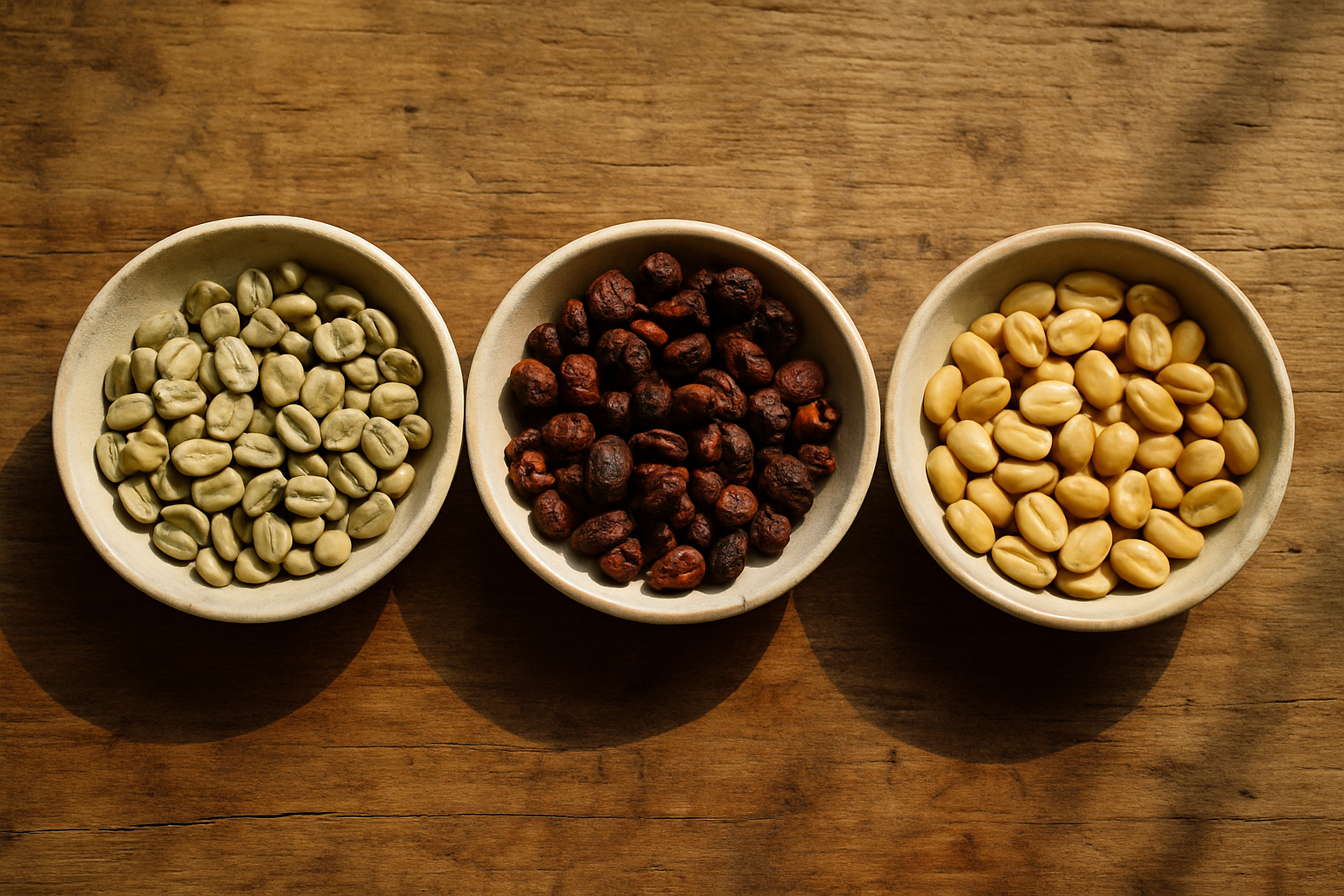
Washed is what happens when you decide the bean is the point, and you want everything else out of the way. After picking, the cherry's skin and pulp get stripped off. The bean still has a sticky mucilage layer clinging to it; the wet method dissolves that layer in water tanks, often with a short controlled fermentation, then rinses the bean clean before drying.

From our coffee sommelier
Maryna's weekly picks
“I taste thousands of coffees a year — I’ll only send you the few worth brewing.”
Something went wrong — please try again.
Free · Weekly · Unsubscribe anytime
What ends up in the cup is crystal-clear flavor that comes from the bean. The cherry has been left at the door. Perfect Daily Grind's processing primer describes washed coffees as bright, citrusy, tea-like, sometimes floral. Ethiopian and Kenyan washed coffees are the archetypes; SCA's piece on the fermentation effect frames them as the cleanest expression of a coffee's microbial signature — roastery shorthand for you taste the bean, not the cherry it came in.
The mouthfeel of a washed coffee is the one that drinks crisp. Lighter body, more structured acidity, a clean finish that doesn't linger. Think Sunday-morning Riesling versus Saturday-night cabernet — same fruit, framed for clarity instead of weight.
Latin America (Colombia, Costa Rica, Guatemala, Honduras) leans washed because the climates make it the most reliable choice. East Africa (Kenya, washed Ethiopians) leans washed when the producer wants the floral and citrus character to come through unobstructed. Washed single origins are the easiest place to taste origin itself.
Who reaches for washed? Drinkers who like clarity over weight. Drinkers who already love a bright Ethiopian pour-over. Most of the light-roast coffees on the shelf are washed, because lighter roasting is what lets the clean character through. The cup that drinks crisp.
Natural: the fruit-forward read
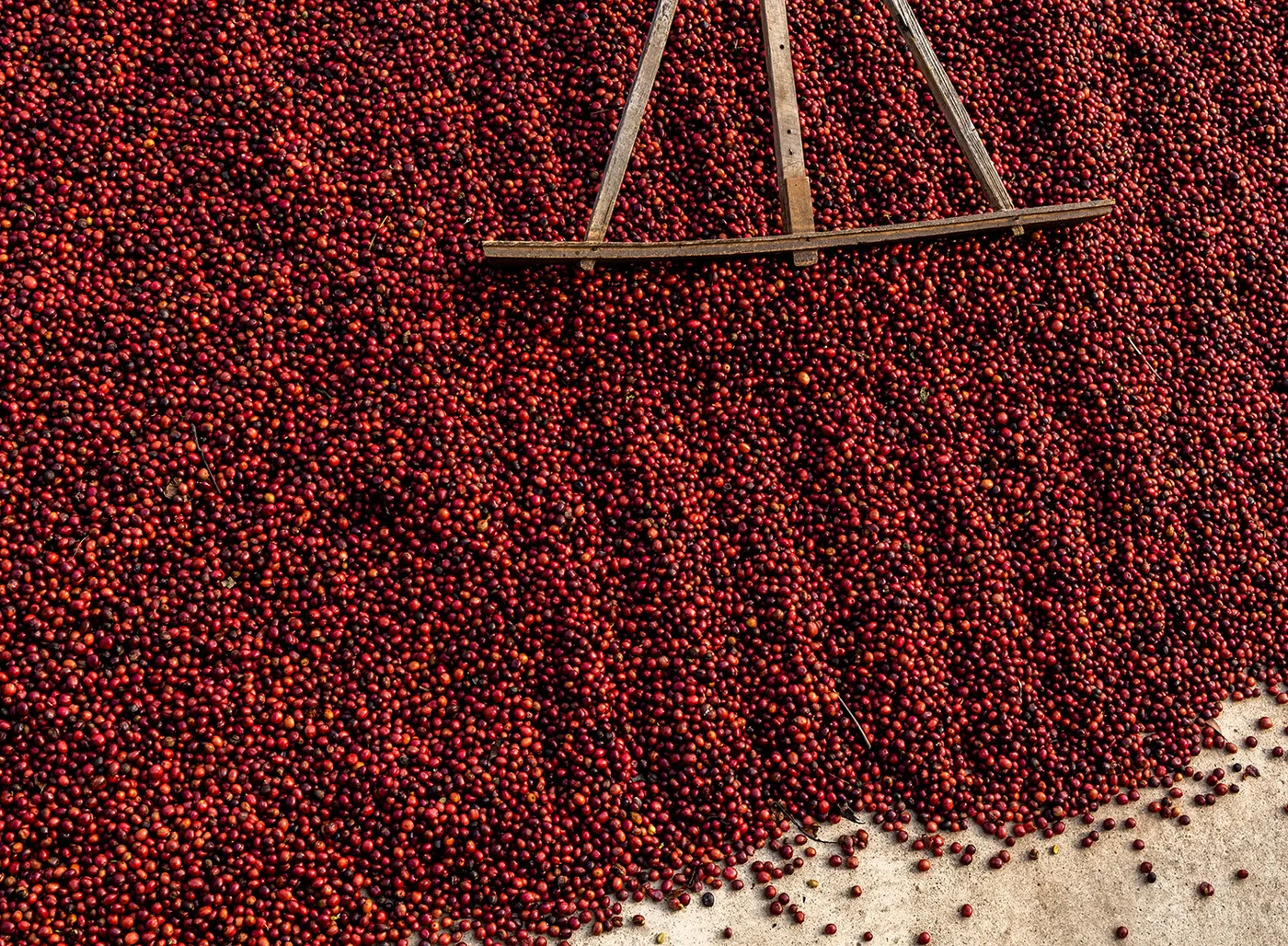
Natural is the oldest method, and the loudest. The picked cherry goes straight onto a drying patio or raised bed, and the bean dries inside the whole fruit. Flesh, sugar, skin, all of it. Drying takes weeks. Fermentation happens inside the cherry, in slow motion, and the bean absorbs the fruit's flavors as the moisture leaves.
What ends up in the cup? Fruit. Sometimes overwhelmingly FRUIT. HomeGrounds describes natural-process coffees as carrying caramel sweetness, chocolate, and a syrupy mouthfeel; the heaviest body of the three. Specialty roasters describe the best naturals with words like blueberry, strawberry jam, tropical fruit, sometimes red wine. The cup that doesn't taste like coffee so much as it tastes like fruit that grew on a coffee tree.
The mouthfeel rounds out, with heavier body, lower acidity, and jammy sweetness. At the experimental end, naturals can carry a boozy or funky note from longer fermentation — what specialty roasters describe as a winey "funk" you either love or you don't.
Ethiopia is the spiritual home: many of the world's most-celebrated naturals are Ethiopian, often from Yirgacheffe, Guji, or Sidamo. Brazilian naturals tend to lean a different way, often nuttier and chocolatier; Colombian naturals are less common than the country's washed coffees but show up on the shelf when a producer chooses to experiment. Across the catalog, naturals show up in more roaster bios than washed coffees do, a real shift from a decade ago.
Who reaches for natural? Drinkers who already love a glass of jammy red wine, an oat-milk latte that tastes like dessert, or a strawberry sorbet. Drinkers who want their coffee to taste like fruit. Once you've had a beautifully done Ethiopian natural, the strawberry-jam-and-cocoa nose on a fresh grind is the smell I keep chasing on weekend mornings. If that's your shelf too, see our fruit-forward coffees.
Honey: the sweet middle
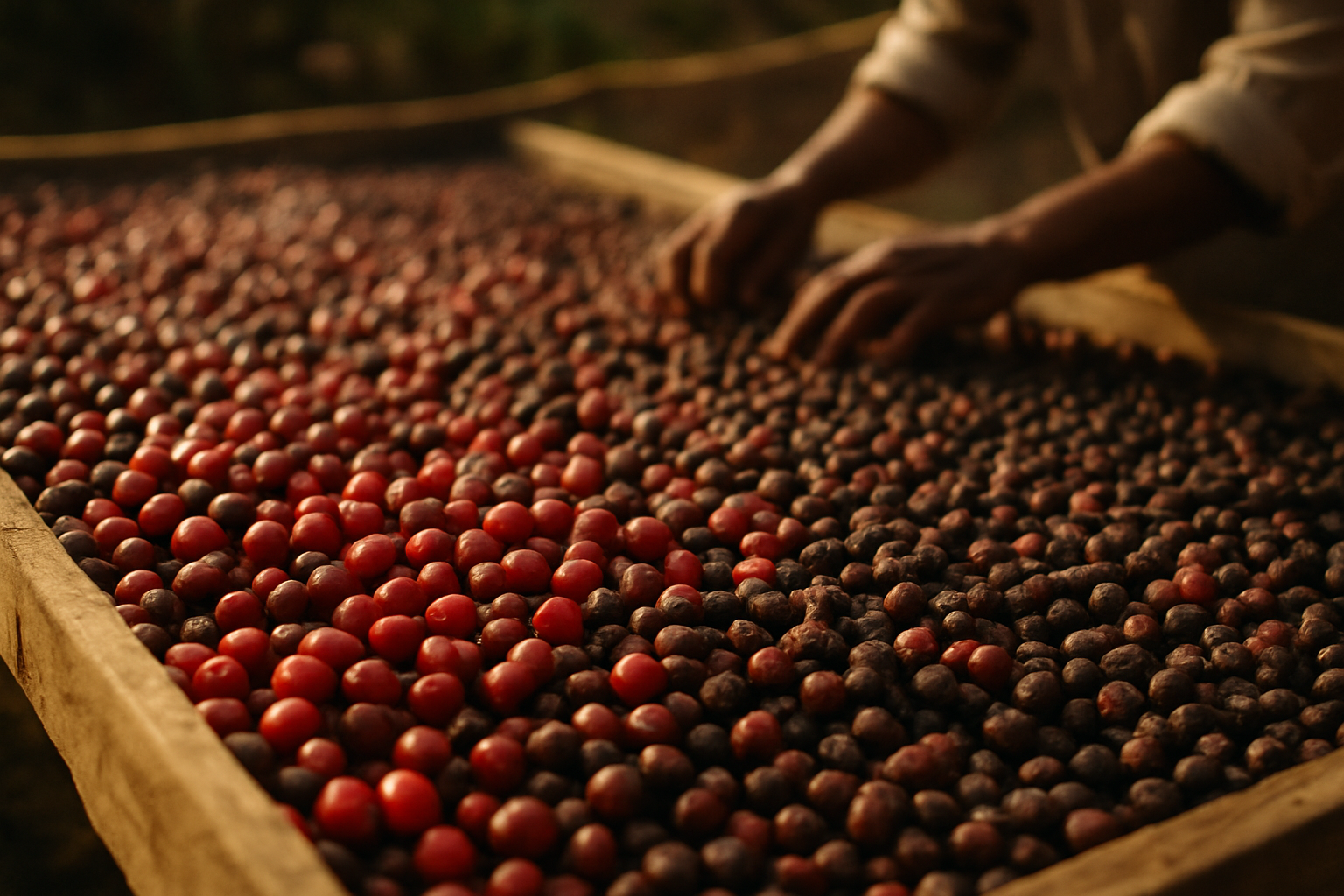
Honey processing is named for what it looks like during drying, not what it tastes like in the cup. The cherry's skin gets stripped off — like washed — but the sticky middle layer (the mucilage) stays on the bean as it dries. That layer is honey-colored, slightly tacky, and visibly amber on the drying bed. The bean dries inside its own glaze.
What ends up in the cup is sweet, syrupy, rounded. Stone fruit (peach, apricot), brown sugar, caramel, sometimes a quiet floral lift. The body sits between washed and natural. Acidity is moderate. The cup that drinks like a dessert without being heavy about it.
Most specialty bags don't bother specifying, but for the curious: white, yellow, red, and black honey describe how much mucilage stayed on the bean during drying, per Perfect Daily Grind's color-tier piece. Less mucilage means lighter color, faster dry, cleaner cup. More mucilage means darker color, longer dry, more body. Black honey leans toward natural in the cup; white honey leans toward washed.
One name-confusion callout: honey-process coffee does not taste like honey, and no honey is added at any point. The name is purely about what the drying bed looks like. (I've fielded this question more than once.)
Costa Rica is the modern home of honey processing; producers there built the systematic approach in the late 2000s. Honduras, El Salvador, and Guatemala have followed. Brazilian pulped natural is the same process by another name, going back to the 1970s.
Who reaches for honey? Drinkers who want sweet without going all the way to fruit-forward. Drinkers who like a syrupy cup but find the funk of some naturals too much. The middle that earns its keep. Honey processing also points at where experimental work is heading — the controlled fermentation in anaerobic and exotic coffees is a natural extension of the same idea.
What to buy next, based on what you already drink
The cleanest way to find the process you'll love is to start from what you already love. Here's the map.
If your daily is a chocolate-cocoa cup (Colombian medium, Brazilian medium, anything that tastes like a cocoa-dusted truffle): start with a Brazilian natural. The fruit gets restrained, the cocoa and brown-sugar character get amplified, and the body gets heavier in a way that flatters the flavors you already love. Like a chocolate truffle that spent a weekend in a fruit orchard.
If your daily is a citrus-floral cup (Ethiopian washed, Kenyan): branch sideways to an Ethiopian natural. Same origin, same brightness underneath, but the citrus turns into strawberry jam and the florals turn into ripe stone fruit. The same coffee, in a different dialect.
If you've never strayed from washed Latin American: try a Costa Rican honey. Familiar clean structure underneath, with a syrupy brown-sugar lift that opens the door to fruit-forward without committing. The on-ramp.
If you've tried a natural and it tasted weirdly fermented: that was probably one processed at the boozier end of the spectrum. Try a different one. A Brazilian natural reads cocoa-and-nut. An Ethiopian Guji natural reads strawberry-and-cream. Variability inside natural is wider than most drinkers realize.
If you want the modern experimental shelf: anaerobic naturals are the avant-garde. Cherries fermented in sealed, oxygen-free tanks, often with wild fruit and wine character. Cup of Excellence competition results skew increasingly toward experimental processes at the top of the rankings. The frontier is real.
If you're not sure where to start
Process is the second-loudest field on a specialty bag, after roast date. Now that you know what the word does, the bag's been telling you something useful the whole time. Same farm, same variety, different word on the label, different cup in the morning.
If you'd rather skip the guessing entirely, Bean Box's Coffee Plan starts you with a sampler so you can taste washed against natural against honey before you commit to a bag. The process choice, made by people who taste these for a living. That's the easy button.
The real prize is the moment the bag's description and the cup in your hand line up. The strawberry jam shows up where the strawberry jam was promised. The clean citrus arrives on schedule. Processing stops being jargon and starts being the most useful word on the bag.
The label was trying to tell you something useful. Now you know what it was.
We want to help you make better coffee at home. Our recommendations are our own, and never sponsored. If you see something you love and buy it through our links, we may receive an affiliate commission (thanks for that!).
From our coffee sommelier
Maryna's weekly picks
“I taste thousands of coffees a year — I’ll only send you the few worth brewing.”
Something went wrong — please try again.
Free · Weekly · Unsubscribe anytime